Symmetry
Many forms mirror themselves. If one side of a creature differs from the other, that difference may be the problem to solve.
One book opens onto a garden where animals are built from clean geometric shapes. This article explores how shape, symmetry and pattern guide your thinking there.
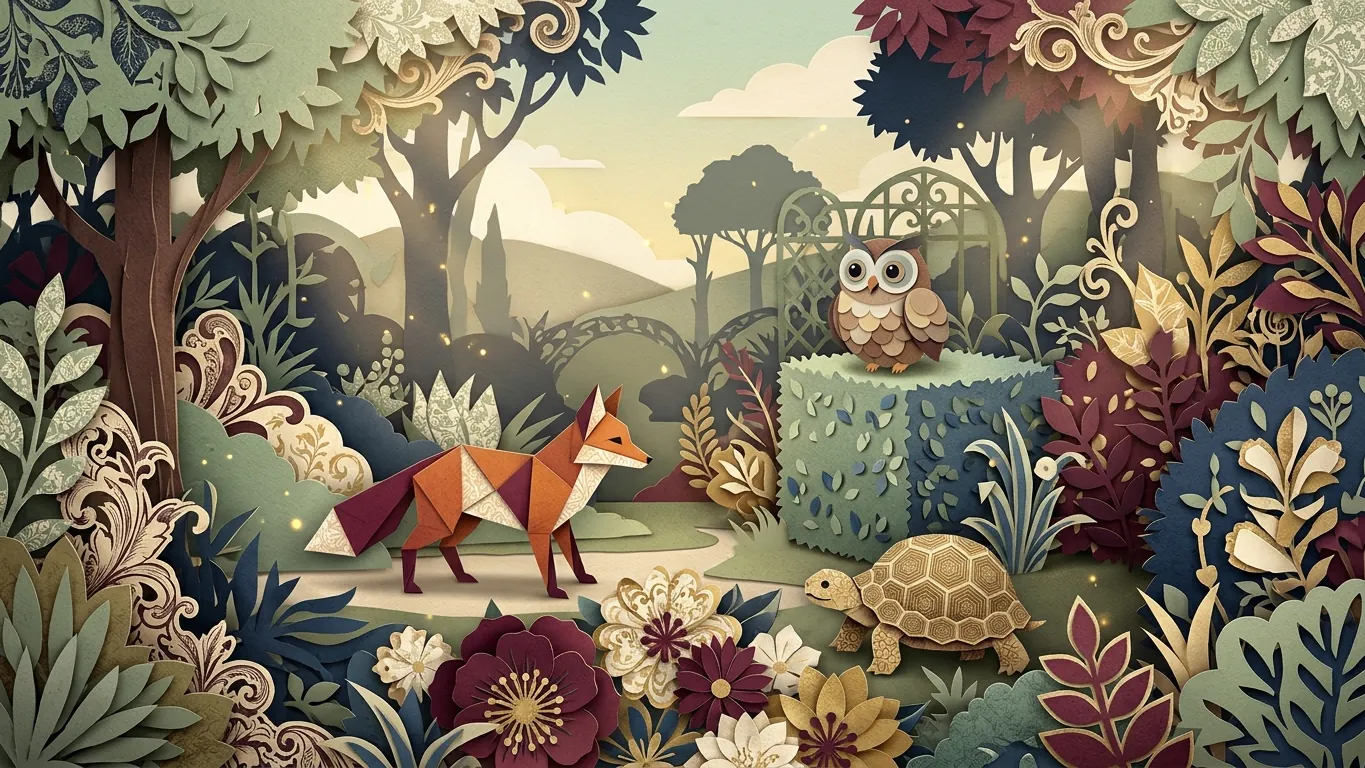
Where the paper ocean is all soft folds and the upside-down castle is all reversed architecture, the garden of geometric animals is a world of clean forms. Its creatures are made from triangles, circles, squares and other simple shapes, assembled into foxes, birds and other animals that seem to move with a precise, almost clockwork grace.
It is a lovely contrast within the game's paper-collage style. Cut paper naturally produces crisp edges, and this world leans into that, turning geometry into something alive.
In a world like this, an animal is also a pattern. Each creature is made of parts, and those parts usually follow a logic: a repeated shape, a mirrored arrangement, a sequence of sizes. When something about a creature looks wrong, it often comes down to a shape out of place or a pattern broken.
Thinking this way links the garden to the work on the bench. Matching illustrations is about continuity and alignment, and the garden asks for the same kind of attention, applied to living shapes rather than drawn lines.
These qualities often help when the garden's puzzles feel tangled.
Many forms mirror themselves. If one side of a creature differs from the other, that difference may be the problem to solve.
Shapes often repeat in a rhythm. A gap or an odd shape in a repeating row stands out once you look for it.
Pieces tend to grow or shrink in steady steps. A shape that is too large or too small for its place is a useful hint.
Related shapes often share tones, which can help you sort which pieces belong to which creature.
Because the animals are alive, their behaviour can be as revealing as their form. How a creature moves, where it goes and how it reacts to changes around it may all hint at what is out of order. A bird that circles strangely or a fox that keeps returning to one spot can draw your eye toward something worth investigating.
This fits the game's broader idea that damaged books change reality. The garden's creatures may be expressing the confusion of their story. Restoring the right order in the book, or the right shape in the world, gives them a chance to settle.
The garden suits players who enjoy quiet observation. Its puzzles reward slowing down and comparing shapes rather than rushing. Some people find it helpful to describe a creature to themselves in simple terms, such as three triangles for the ears or a row of circles along the tail, because naming the pattern makes any break in it easier to spot.
Most of all, the garden is a pleasant place to spend time. Its blend of soft greenery and crisp geometry captures the playful spirit of the whole game, where craft and imagination meet on the same page.
 A shelf of restored covers and the mystery they frame
A look at the collection of restored covers in the magic bookbinder game and how it connects to the gradual reveal of the workshop's mystery. Light…
Read more
 Paper, type and drawings that breathe
An opinion piece on the paper-collage art, old-style typography and living drawings of the magic bookbinder game, and why they suit its themes so well.
Read more
 First steps in the magic bookbinder's workshop
A gentle beginner's guide to the magic bookbinder game: how damaged books change reality and a calm routine for approaching your first restoration.
Read more