Watch before acting
Let the waves move for a while. Patterns in their motion often become clearer after a short wait.
One of the books in the workshop opens onto an ocean made of paper. This article looks at what makes this world distinctive and how to approach its puzzles calmly.
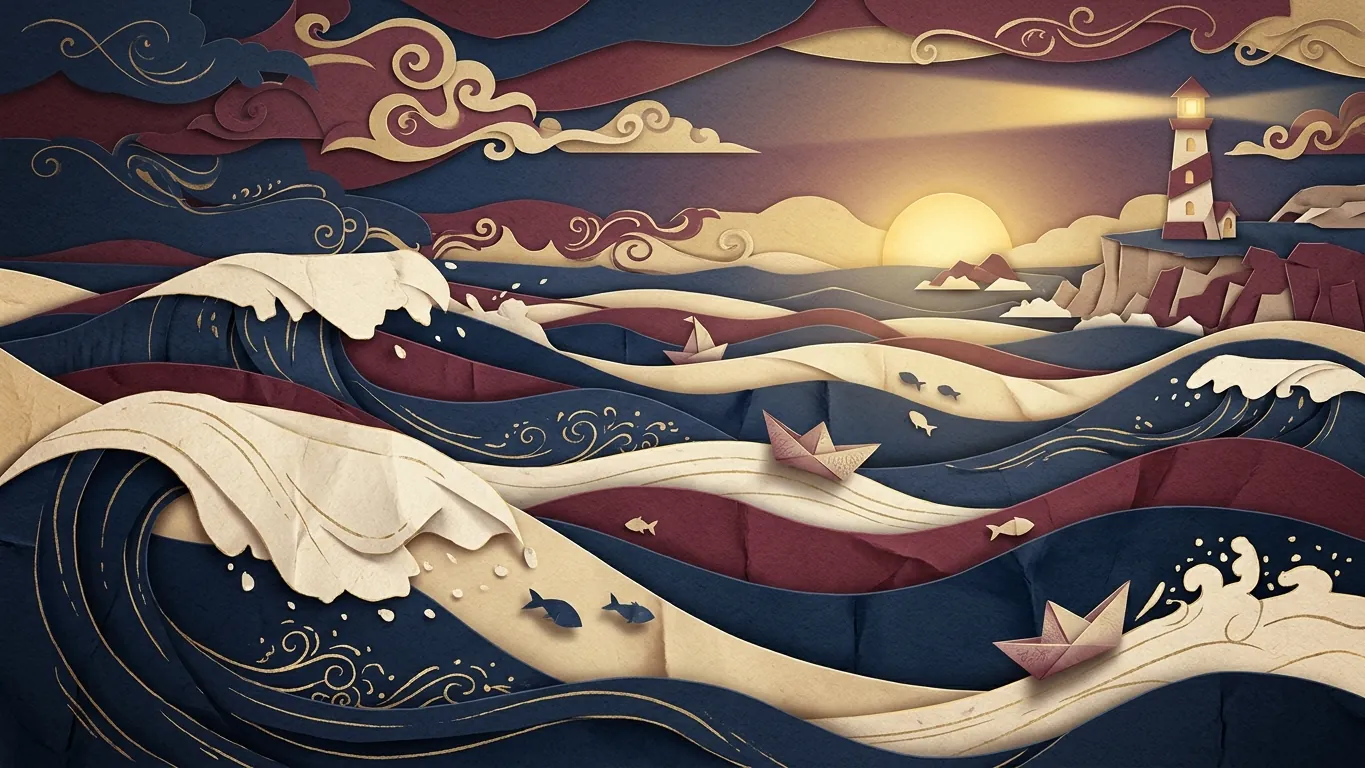
Each restored book in the game opens a separate world with a puzzle of its own, and the paper ocean is one of the most evocative. Picture a sea built from folded sheets, its waves layered like pages stacked on a desk, its surface rustling rather than splashing.
The idea suits the game's paper-collage style perfectly. Water is usually the hardest thing to make from paper, so seeing an entire ocean rendered in folds and cut shapes gives this world a dreamlike, handmade quality that sets it apart from the rest of the workshop.
In a world made of paper, depth is often expressed through layers. Waves in front overlap waves behind; distant shapes sit on flatter, paler sheets. When exploring the paper ocean, it helps to think about which layer things belong to and how they overlap.
This way of seeing connects naturally to the work on the bench. Just as you compare torn edges and drawn lines when restoring a page, here you can watch how layers meet and where the pattern seems broken. A wave that does not line up with its neighbours, or a fold that seems to come from nowhere, may point toward the heart of the puzzle.
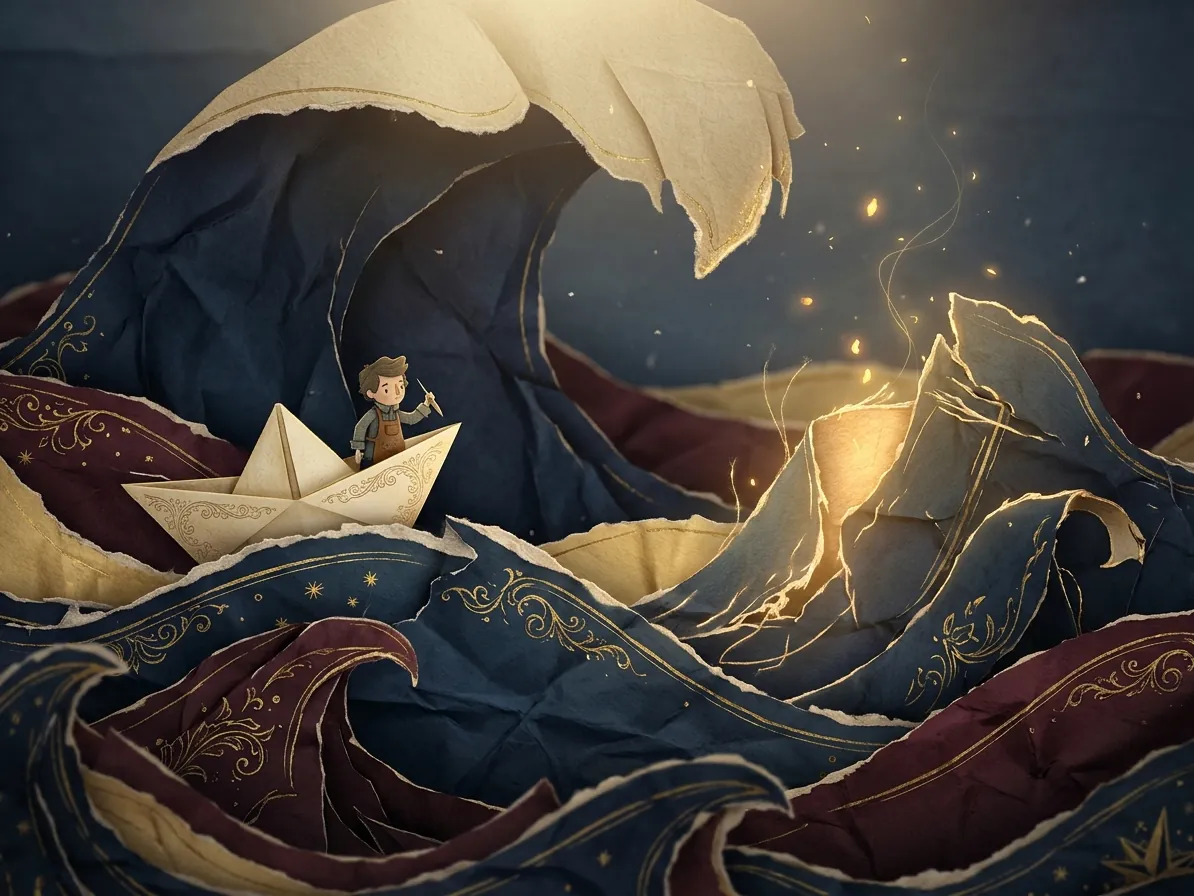
Oceans move, and even a paper one carries a sense of rhythm. Tides, drifting objects and travelling waves suggest direction and timing. In a game about restoring the proper order of stories, that rhythm can be read as a narrative of its own: something rises, something drifts, something returns.
Paying attention to these movements is a gentle way to understand what the world wants. When things flow smoothly, the story is likely in good shape. When the movement stutters or loops strangely, it may echo damage that still needs repairing in the book itself.
A few approaches tend to feel natural in this world.
Let the waves move for a while. Patterns in their motion often become clearer after a short wait.
Notice what sits in front and what sits behind. Overlaps can reveal how pieces of the world connect.
Search for the fold, wave or drifting object that does not match its surroundings.
If the ocean puzzles you, revisit the book's pages. The words and drawings may describe the sea's intended shape.
Part of the paper ocean's charm is its calm. It invites slow exploration and close looking, which fits the patient spirit of bookbinding. It also captures something the whole game seems interested in: the way a story can become a place, and the way repairing that story changes how the place feels.
Whether you reach it early or late, the paper ocean rewards players who take their time, notice small irregularities and treat the world as a page waiting to be read.
 The upside-down castle: when a story stands on its head
An explainer on the upside-down castle in the magic bookbinder game, with ideas for thinking in reversed directions and reading an inverted world.
Read more
 The garden of geometric animals
An explainer on the garden of geometric animals in the magic bookbinder game, looking at shapes, symmetry and patterns in this living paper world.
Read more
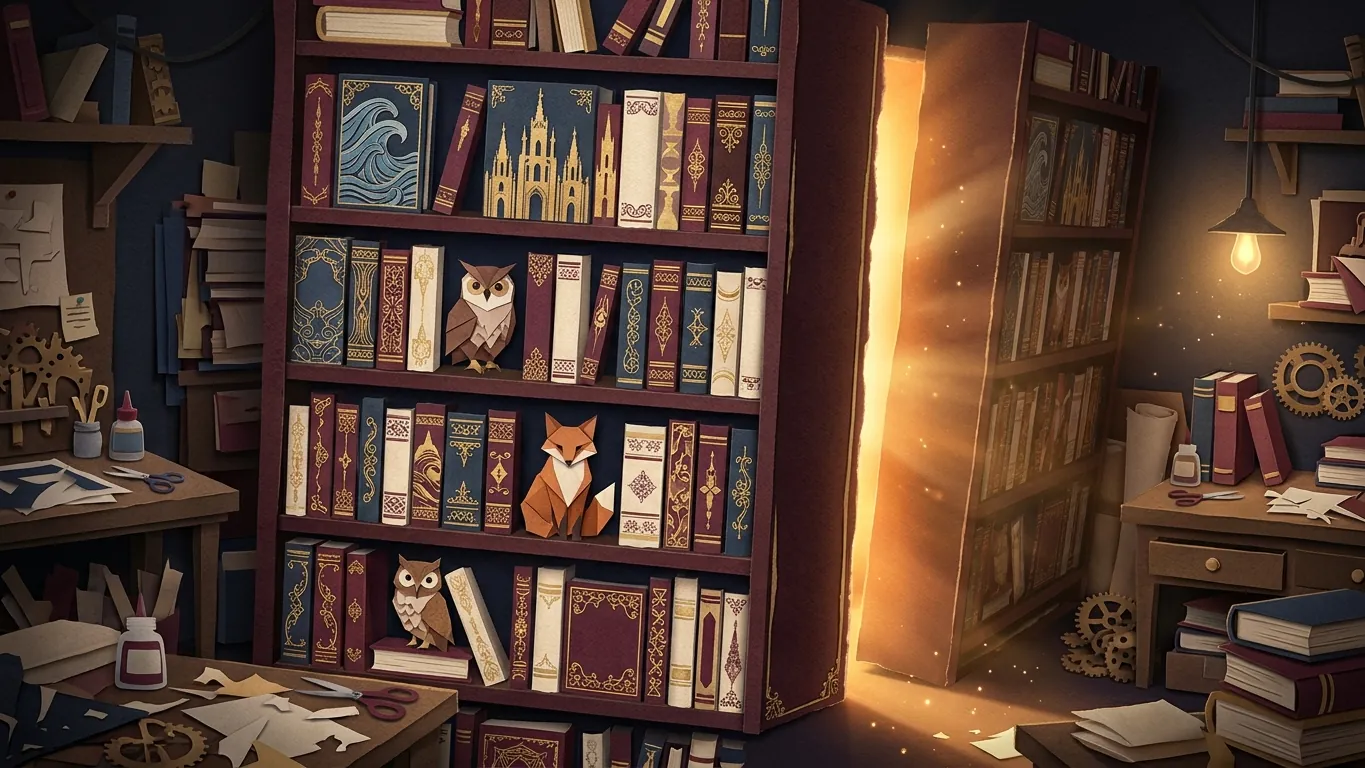 A shelf of restored covers and the mystery they frame
A look at the collection of restored covers in the magic bookbinder game and how it connects to the gradual reveal of the workshop's mystery. Light…
Read more