Restoring damaged pages without losing the thread
Page repair sits at the heart of the bookbinder's craft. These tips focus on reading torn edges, comparing textures and keeping your patience when a fit is only partly right.
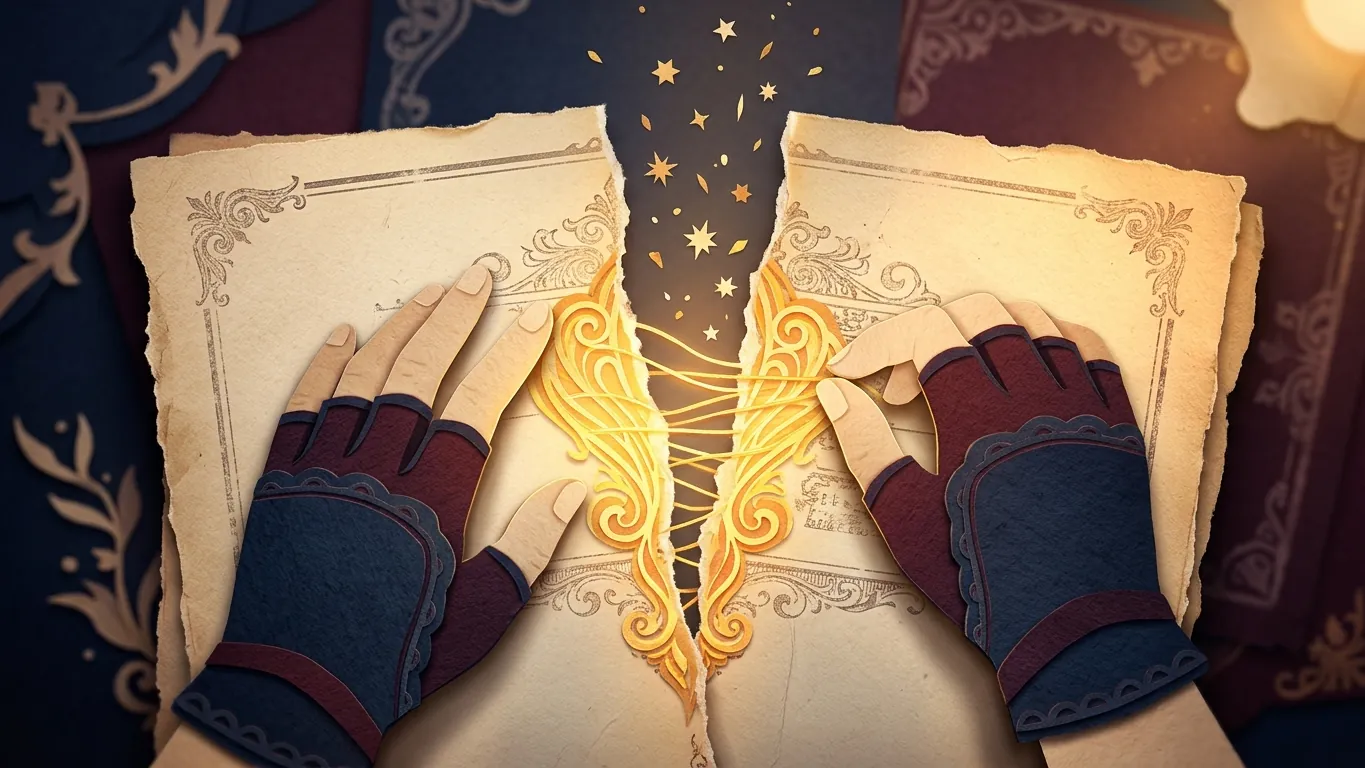
Why page repair often comes first
Many restorations begin with torn pages simply because they are the most visible damage. A page split in two is an obvious problem, and fixing it tends to stabilise the book enough that other issues, such as misplaced illustrations or scrambled lines, become easier to read.
There is also a practical reason. Whole pages give you context. Once a page is mended, you can see what it was meant to show, which often helps you decide where the remaining fragments belong.
Read the shape of every tear
A torn edge is a fingerprint. Jagged tears, long straight splits and soft frayed corners all suggest different partners. When you are holding a loose piece, look closely at its outline and compare it against the gaps that remain. A distinctive notch or curve can narrow your options considerably.
It helps to work from the most distinctive edges first. Plain, straight edges could belong almost anywhere, so leave them until the unusual pieces have found their homes. By then, the plain pieces usually have far fewer possible places to go.
If a piece seems to fit but feels slightly off, trust that feeling and check again. A near match can be misleading, and correcting it early saves confusion later.
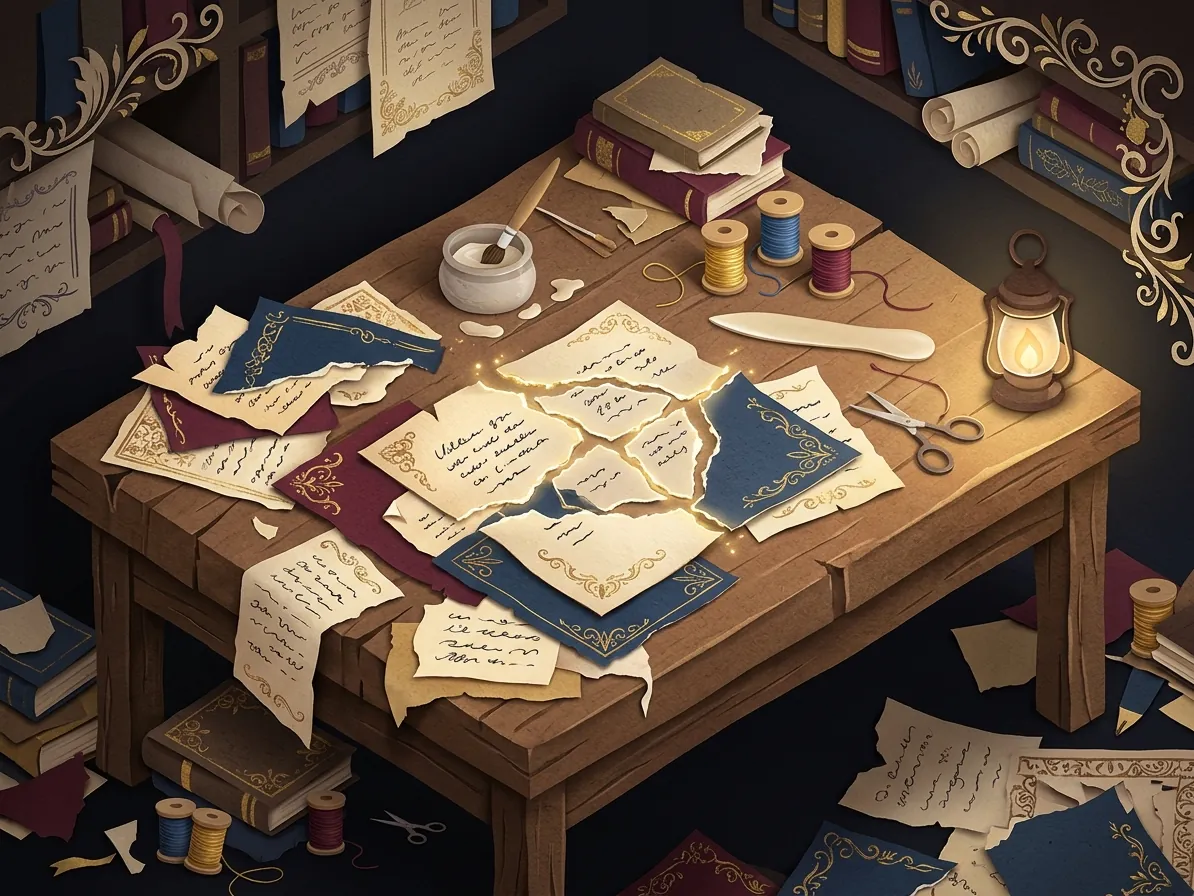
Look at texture, tone and decoration
Shape is only one clue. The paper itself carries information. Pages in an old book may differ in tone, with some slightly darker or more worn than others. Decorative borders and printer's ornaments continue across tears, and following a border line is a reliable way to confirm that two pieces belong together.
Illustrations that cross a tear are especially helpful. If half of a drawing sits on one fragment, its other half has to be somewhere nearby. Following the line of a drawn wave, branch or tower can lead you straight to the matching piece.
When a mended page changes the world
Because the books affect reality, restoring a page is rarely just a tidy fix on the bench. The surroundings respond, sometimes subtly and sometimes in striking ways. Treat these changes as feedback. If the world settles and becomes more coherent, the repair likely matches the story. If something still feels unsettled, there may be more to fix on that page or a related one.
Watching this feedback closely makes the game more rewarding. It turns each repair into a small conversation between the book and the world around it.
Habits that tend to slow players down
A few patterns come up often. Trying every fragment in every gap is tiring and rarely efficient; sorting pieces by shape or decoration first is calmer. Rushing past partial fits can also cause trouble, because a piece placed in the wrong spot hides the gap where it really belongs.
Finally, it is easy to forget the rest of the book while focused on one page. If a tear seems impossible, the missing piece may be tucked elsewhere, or another kind of repair may need to happen first. Stepping back to look at the whole book is often the quickest way forward, even if it feels like a detour.
Related articles
 Matching illustrations so the pictures tell the story again
A guide to aligning illustrations in the magic bookbinder game: following lines, colours and scenes so drawings return to their rightful place.
Read more
 Putting a scattered story back in order
How to rearrange scattered text fragments in the magic bookbinder game, using tone, time, grammar and story logic to put a narrative back in order.
Read more
 The paper ocean: a sea made of folds and ink
An explainer on the paper ocean, one of the worlds inside the magic bookbinder's books, with thoughts on how to approach its folded, drifting puzzles.
Read more